


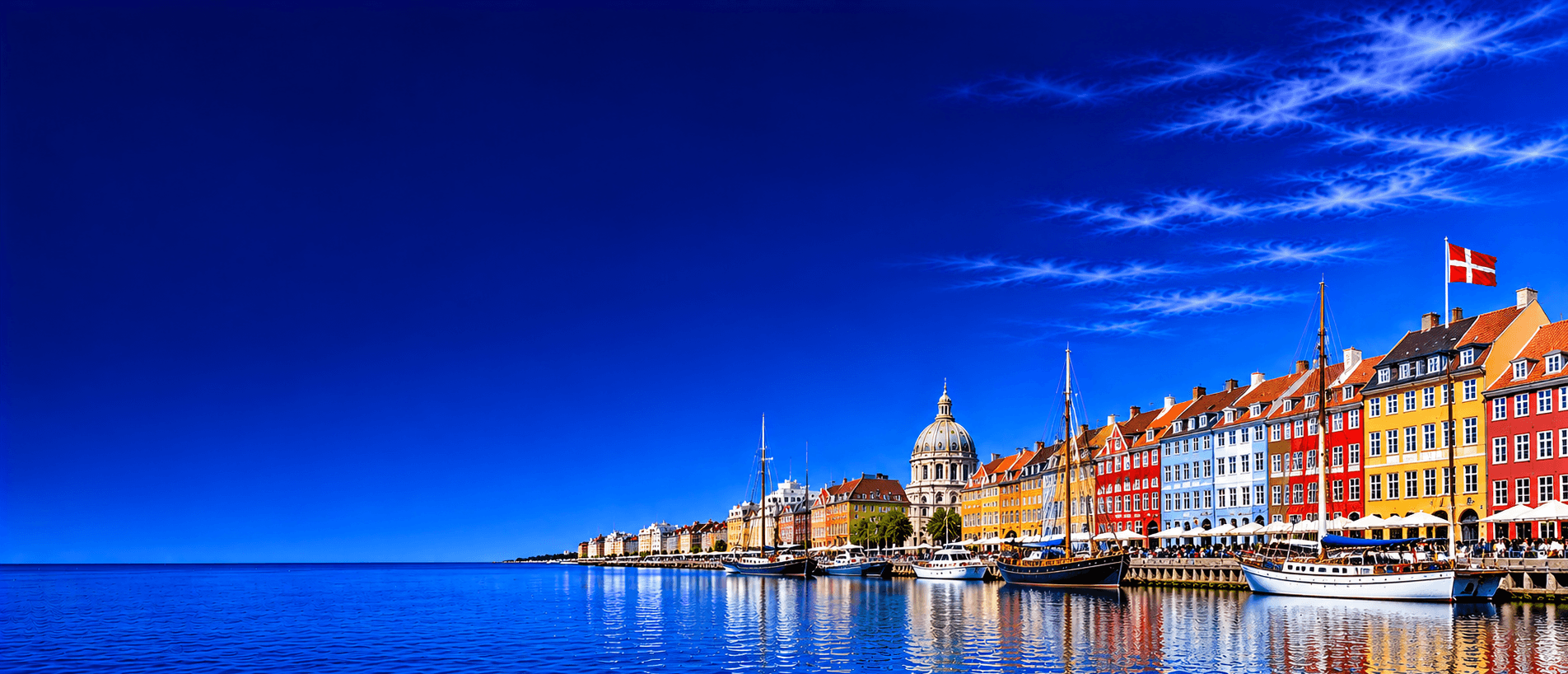
Why Study in Denmark?
Denmark is an attractive destination for Bangladeshi students because of its high-quality education, internationally recognized degrees, and practical, industry-oriented learning system. Many universities offer English-taught programmes, modern facilities, and strong research opportunities. Students can gain international exposure, work part-time while studying, and explore career opportunities. Denmark also offers a safe living environment, a high standard of living, and post-study opportunities for eligible graduates.
Study in Denmark: A Complete Guide
Requirements, costs, intakes and work opportunities for Bangladeshi students.
Jump to a section
Why Study in Denmark?
Top 5 reasons to study in Denmark
- 1High-quality education
- 2Strong innovation ecosystem
- 3Strong industry connections
- 4Excellent work-life balance
- 5Very strong post-study job-search provision
Top Courses in Denmark
Requirements to Study in Denmark
Language Requirements
Denmark offers more than 500 English-taught programmes, so international students can study without knowing Danish. For English-taught programmes, students generally need English proficiency equivalent to at least English B in the Danish education system.
IELTS Academic
6.5+
TOEFL iBT
79–93+
Cambridge English
CAE/C1 or equivalent
Academic Requirements
Academic requirements depend on the study level, chosen programme, and institution. Danish institutions assess international qualifications against their specific admission requirements.
Undergraduate Programmes
- Completion of Higher Secondary School / equivalent qualification
- Academic certificates and transcripts
- Qualification equivalent to a Danish upper-secondary school leaving certificate
- Meeting specific subject and grade requirements
- English language proficiency
- Additional prerequisites may apply depending on the programme
Postgraduate Programmes
- A recognized Bachelor's degree or equivalent qualification
- Undergraduate transcripts and academic records
- Relevant academic background
- Meeting the programme's specific admission requirements
- English language proficiency
- CV, SOP and recommendation letters may be required
Visa Requirements
International students from outside the EU/EEA generally need a Danish residence permit for study. Students must be admitted to a full-time programme at a recognized Danish higher education institution and demonstrate sufficient financial means to support themselves.
Required documents generally include:
- Valid passport
- University admission letter
- Academic certificates and transcripts
- Proof of sufficient funds
- Tuition fee payment documentation, where applicable
- Residence permit application and biometric information
- Other documents required by the Danish authorities
Intakes to Study in Denmark
Autumn Intake
The main and most popular intake in Denmark. It offers the widest range of Bachelor's and Master's programs and generally provides more opportunities for international students. Most international students prefer this intake.
Spring Intake
Available at a smaller number of universities and programs. It can be a suitable option for students who miss the Autumn intake or whose chosen program specifically offers a January/February start.
Cost of Studying in Denmark
Tuition Fees
The cost of studying in Denmark varies depending on the university, degree level, chosen program, and whether the student is from the EU/EEA or outside the EU/EEA. International students from countries outside the EU/EEA, including Bangladesh, generally need to pay tuition fees. Tuition fees for international students can vary significantly between universities and programs. Generally, students can expect to pay approximately:
Undergraduate (UG)
DKK 45,000 – 120,000+ per year
(Approx. BDT 8.1 lakh – 21.6 lakh+)
Postgraduate (PG)
DKK 60,000 – 150,000+ per year
(Approx. BDT 10.8 lakh – 27 lakh+)
Living Cost
Living expenses in Denmark can vary depending on the city, accommodation, and lifestyle. Copenhagen and other major cities are generally more expensive, while smaller cities may offer relatively lower living costs.
Estimated total cost (tuition + living)
DKK 120,000 – 270,000+ per year
Top Universities of Denmark
Post-Study Work Opportunities in Denmark
Denmark offers international graduates opportunities to gain work experience after completing their studies through a post-study job-seeking residence permit. Graduates of eligible higher-education programs may generally receive up to 3 years to look for a job in Denmark after graduation. This provides valuable time to gain professional experience, build international networks, and pursue long-term career opportunities in Denmark.
Still confused?
Ask us anything about studying in Denmark. Share your details and our counsellors will get back to you.
It only takes a minute. We’ll contact you with answers and the next steps.